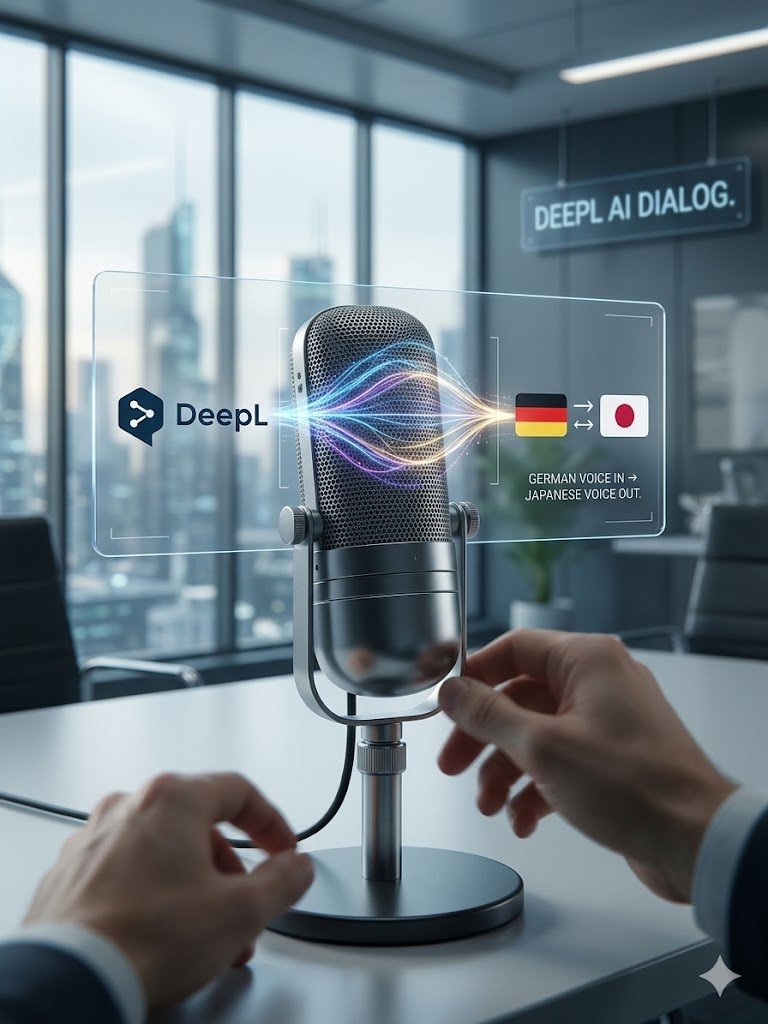
DeepL Expands From Text to Voice Translation
DeepL, the company acclaimed for its mastery of written translation, is venturing into a new dimension—voice. By moving beyond text, DeepL aims to capture not only what we write, but how we speak. This evolution marks a significant moment in the interplay between AI, language, and human expression, bridging the gap between written intelligence and auditory communication.
Quick note: Want to automate your operations with AI? Check our [Solutions].
DeepL’s new initiative to translate voices in real-time signals a milestone in the next generation of language technology. Until now, the company established itself as a leader with contextually nuanced text translations that often surpassed those of its rivals. Transitioning this expertise into voice means moving from semantic precision to emotional fidelity—replicating tone, rhythm, and cadence across languages—something no AI system has fully mastered yet.
What makes this move pivotal is its alignment with the broader shift toward multimodal AI systems. Voice translation is not simply an add-on feature but a gateway to deeper, more intuitive forms of human-computer interaction. If DeepL succeeds, users might soon converse seamlessly across linguistic boundaries, as if technology itself were invisible—a hallmark of AI maturity that transforms communication from transactional to empathic.
A New Frontier in Autonomous AI Communication
The integration of voice translation elevates AI from a tool of textual understanding to a dynamic agent in real-world dialogue. In an era where autonomous AI is expanding into customer service, healthcare, and global business operations, the ability to interpret and reproduce natural speech in multiple languages unlocks a new level of adaptability. For DeepL, this is not just about translation—it’s about empowering AI to listen, comprehend, and respond autonomously.
Imagine a future where an AI assistant equipped with DeepL’s voice translation engine can mediate international negotiations, provide instant multilingual therapy sessions, or enable global teams to collaborate without linguistic friction. This future redefines AI as an active participant in communication, capable of preserving nuance and emotional tone while bridging cultural divides. Voice translation makes AI not just a processor of information but a partner in understanding.
For the ecosystem of autonomous systems, DeepL’s expansion sets off a race toward voice-capable intelligence. Competing platforms will need to develop or integrate similar capabilities to remain relevant in human-centered automation. As AI agents gain voices that can both understand and express meaning, the global digital landscape will evolve from text-driven interaction to a symphony of spoken connections.
DeepL’s turn toward voice signals more than a feature upgrade—it’s a statement about the future of intelligent communication. As language AI grows more autonomous, voice will become the new interface connecting humans and machines across cultures. For technologists, strategists, and innovators, the message is clear: the era of silent AI is ending, and the next frontier will speak—fluently, emotionally, and universally.
Ready to lead the AI revolution in your industry? Universe Agentic builds custom autonomous ecosystems that turn complex data into measurable results. [Explore our AI Solutions]