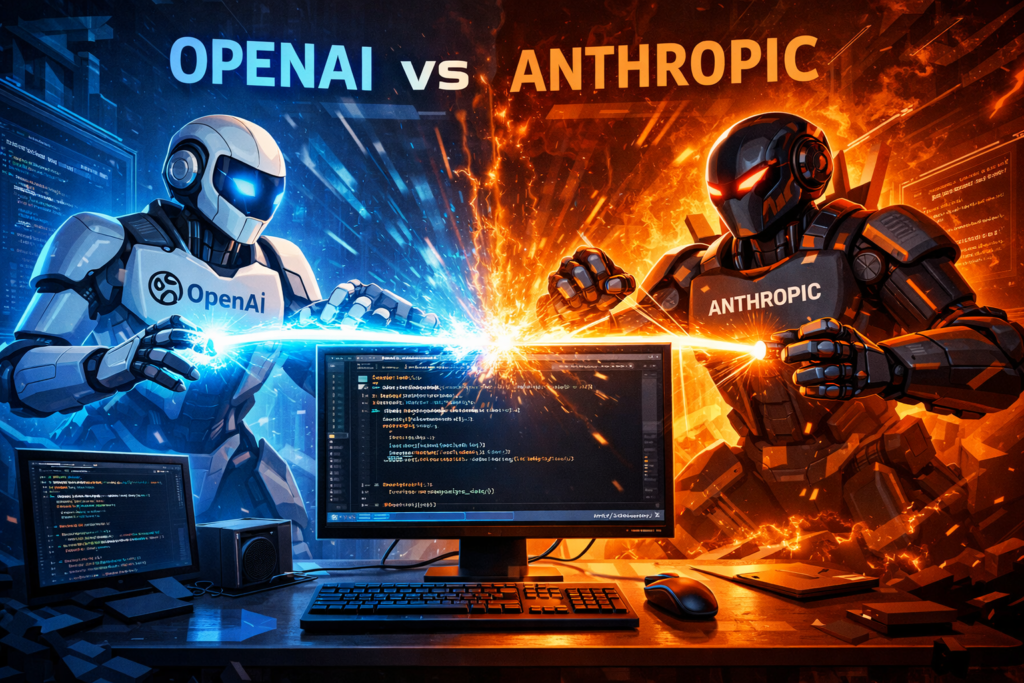
The competition in AI autonomy is intensifying as OpenAI unveils a significant upgrade to its Codex model—one that signals a bold leap toward agentic computing and a direct challenge to rival Anthropic. This new iteration gives Codex the power to interact more seamlessly with desktop environments, hinting at a future where AI doesn’t just assist with code but orchestrates complex workflows across systems. Universe Agentic explores what this means for the next generation of autonomous AI agents.
Quick note: Want to automate your operations with AI? Check our [Solutions].
OpenAI’s Revamped Codex Brings New Desktop Power
OpenAI’s latest enhancement to Codex transforms it from a coding assistant into a truly interactive software operator. By deepening integration with desktop environments, Codex can now manage applications, execute context-based commands, and streamline tasks that previously required constant human supervision. This evolution echoes OpenAI’s growing ambition to bridge the gap between natural language processing and real-world digital operations—a domain increasingly contested by Anthropic’s Claude models.
The new features center on Codex’s ability to understand both structured and unstructured commands, blending coding logic with natural conversation. Developers can now request system-level actions, such as setting up local development environments, organizing files, or coordinating between multiple programs, all through natural language instructions. It’s a step closer to agentic behavior—where the model begins to act as an autonomous operator rather than a reactive tool.
This sophistication doesn’t just benefit coders. Enterprise users, researchers, and creative professionals could soon experience a new era of productivity, where Codex handles the digital logistics of daily workflows. By positioning Codex as a desktop-native AI, OpenAI is effectively building the foundation for agents that can reason, execute, and adapt—core qualities that define autonomy in the AI ecosystem.
A Strategic Shift in the Future of AI Autonomy
With this launch, OpenAI signals a pivot from being a model provider to being an ecosystem leader in intelligent automation. Anthropic’s Claude has captured attention for its emphasis on safe reasoning and nuanced dialogue, but OpenAI’s focus here is operational capability—granting Codex the agency to act. This strategic divergence underscores two philosophies competing for dominance: guarded alignment versus empowered autonomy.
That empowerment comes with implications. Giving Codex more control over a user’s desktop introduces questions about oversight, data security, and behavioral transparency. OpenAI’s balancing act will therefore depend on its ability to enforce trust mechanisms—allowing users to delegate control confidently. If handled wisely, these agentic features could catalyze a paradigm shift akin to how graphical user interfaces once transformed computing.
Long term, this move positions OpenAI to define not just how AI models think, but how they do. The company’s aggressive advancement in agentic capability suggests that the future of computing won’t be about applications at all—it will be about autonomous systems managing them. For Anthropic and others, the message is clear: the next frontier isn’t just intelligence; it’s initiative.
OpenAI’s beefed-up Codex marks a milestone in the evolution of autonomous AI agents, pushing the boundary between language and action. As Codex gains more power over the desktop, it heralds a world where AI can orchestrate digital ecosystems with human-like fluidity. For innovators, organizations, and policymakers alike, the takeaway is unmistakable—automation is becoming agentic, and the players who master safe autonomy will define the next era of intelligent computing.
Ready to lead the AI revolution in your industry? Universe Agentic builds custom autonomous ecosystems that turn complex data into measurable results. [Explore our AI Solutions]