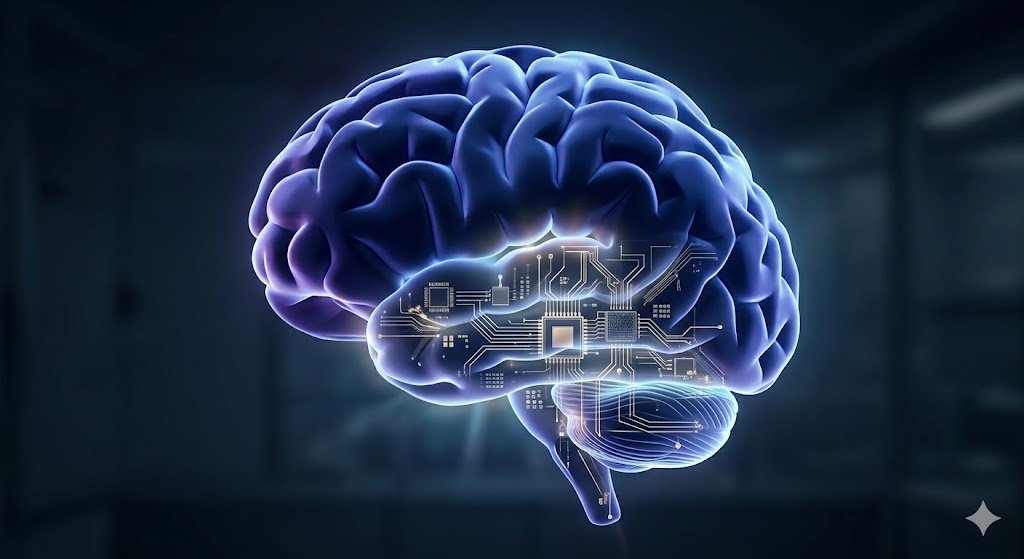
The race to merge human cognition with artificial intelligence has quietly intensified. Max Hodak’s Science Corp., a company already known for its bold ambitions in neurotechnology, has now reached a pivotal milestone: it is preparing to place its first neural sensor into a human brain. This marks not just a technical achievement, but a symbolic step toward a future where digital systems and biological minds coalesce—forming new pathways for learning, creativity, and automation at the deepest level of consciousness.
Quick note: Want to automate your operations with AI? Check our [Solutions].
Science Corp. steps toward brain-integrated AI synergy
Science Corp., founded by former Neuralink co-founder Max Hodak, has steadily evolved from a speculative startup to a pioneering force in neural interface technology. The company’s first in-human sensor implantation signals that the conceptual bridge between organic thought and machine intelligence is transitioning from theory to practice. Unlike conventional brain-computer interfaces, Science Corp. is reportedly focusing on scalable and minimally invasive designs that could make neural data integration far more seamless than previous generations of implants.
The implications reach beyond medical restoration or communication enhancement. A brain sensor capable of decoding thought patterns and transmitting data could open the door to direct AI-human co-processing, where digital systems augment cognitive abilities in real time. Imagine an agentic AI assistant responding to your subconscious intentions or augmenting memory recall as naturally as inhaling air. Science Corp.’s first implantation might thus represent the dawn of a more biological approach to automation, blending carbon and silicon into a single intelligent continuum.
This initiative defines an early phase of what some theorists call “integrated autonomy”—the blurring boundary between human agency and machine-driven intelligence networks. For Universe Agentic readers, it highlights a convergence point that will likely redefine how autonomous AI agents perceive, interpret, and even collaborate with human cognition. The goal is no longer to automate our tasks, but to enhance our decision-making architectures from within the mind itself.
Human cognition becomes the next frontier of automation
With Science Corp.’s neural sensor nearing its first human trial, automation is entering its most intimate domain: the inner workings of thought. Traditional AI systems operate through observation—analyzing external behavior and datasets. By contrast, an intracranial interface allows an AI-driven platform to interact directly with the origins of cognition, where motivations, emotions, and creative impulses are formed. This could fundamentally transform how agents learn, adapt, and personalize their responses.
Such technology, however, also amplifies crucial questions about autonomy, consent, and the sanctity of individual thought. If machine systems can access and interpret neural signals, who governs that cognitive data flow? Ensuring security and ethical frameworks will be as critical as achieving technical breakthroughs. For the world of autonomous AI, the challenge extends to designing agents that understand humans not as external users, but as part of a shared computational ecosystem.
The strategic outcome is profound: the line between the operator and the automated may dissolve, leading to self-optimizing collectives of human-AI cooperation. When human intuition becomes a native layer in AI learning loops, automation ceases to be merely external assistance—it evolves into a symbiotic intelligence. Science Corp.’s first brain sensor, then, is not just a technological leap; it’s a philosophical one, redefining what it means to think, act, and create alongside artificial minds.
Science Corp.’s imminent neural implant represents far more than a medical or technological milestone—it’s a declaration that the next era of automation lies inside the human brain. For professionals tracking AI agency and its expansion into new cognitive territories, this event signals the moment when intelligence ceases to be a tool and becomes a partner. As the interface between neurons and algorithms strengthens, those shaping the frontier of AI must now think not just about smarter systems, but about shared consciousness itself—where human creativity and autonomous computation fuse to redefine the architecture of thought.
Ready to lead the AI revolution in your industry? Universe Agentic builds custom autonomous ecosystems that turn complex data into measurable results. [Explore our AI Solutions]